
News
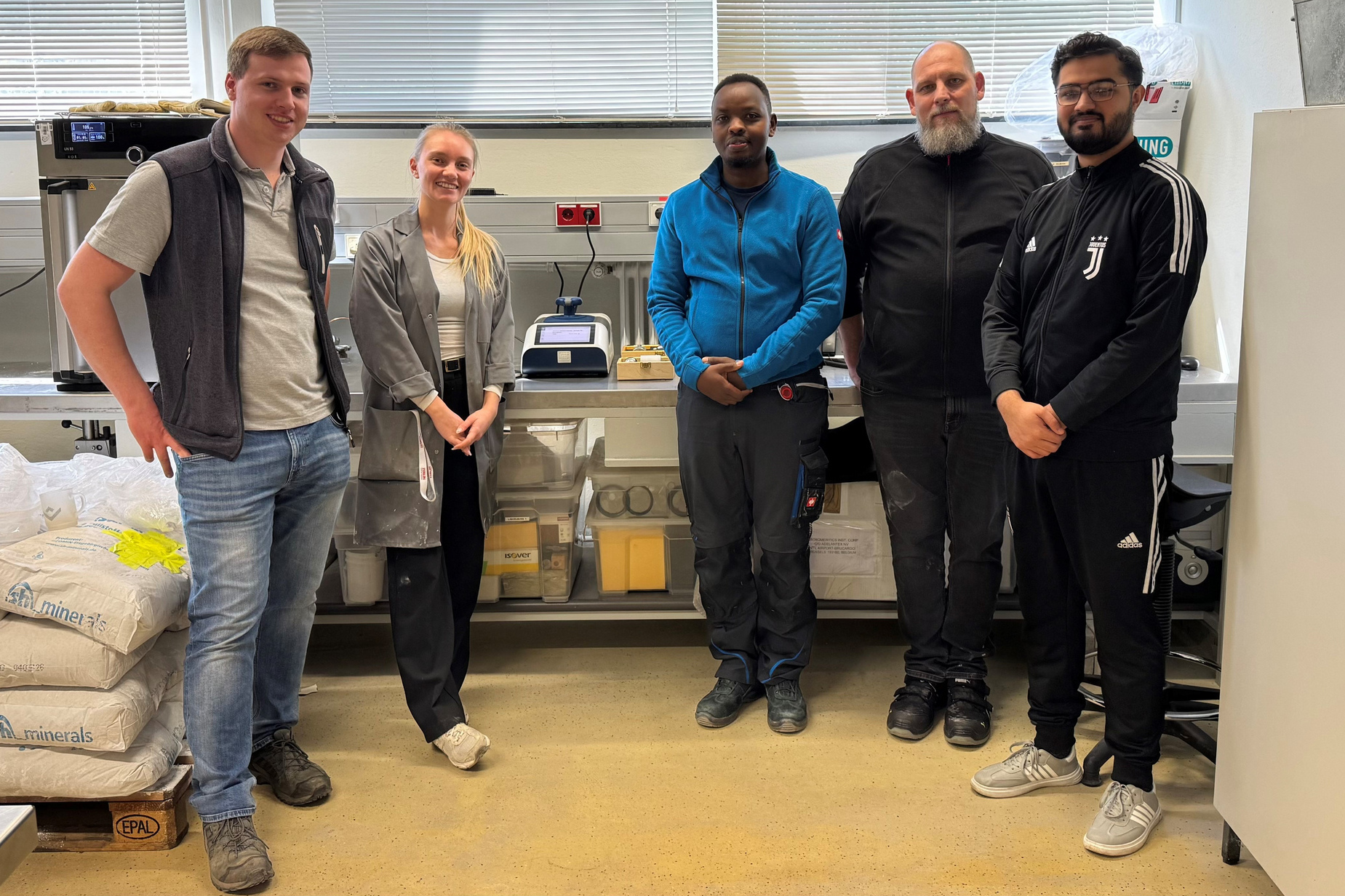
Helium pycnometer in operation at the research centre
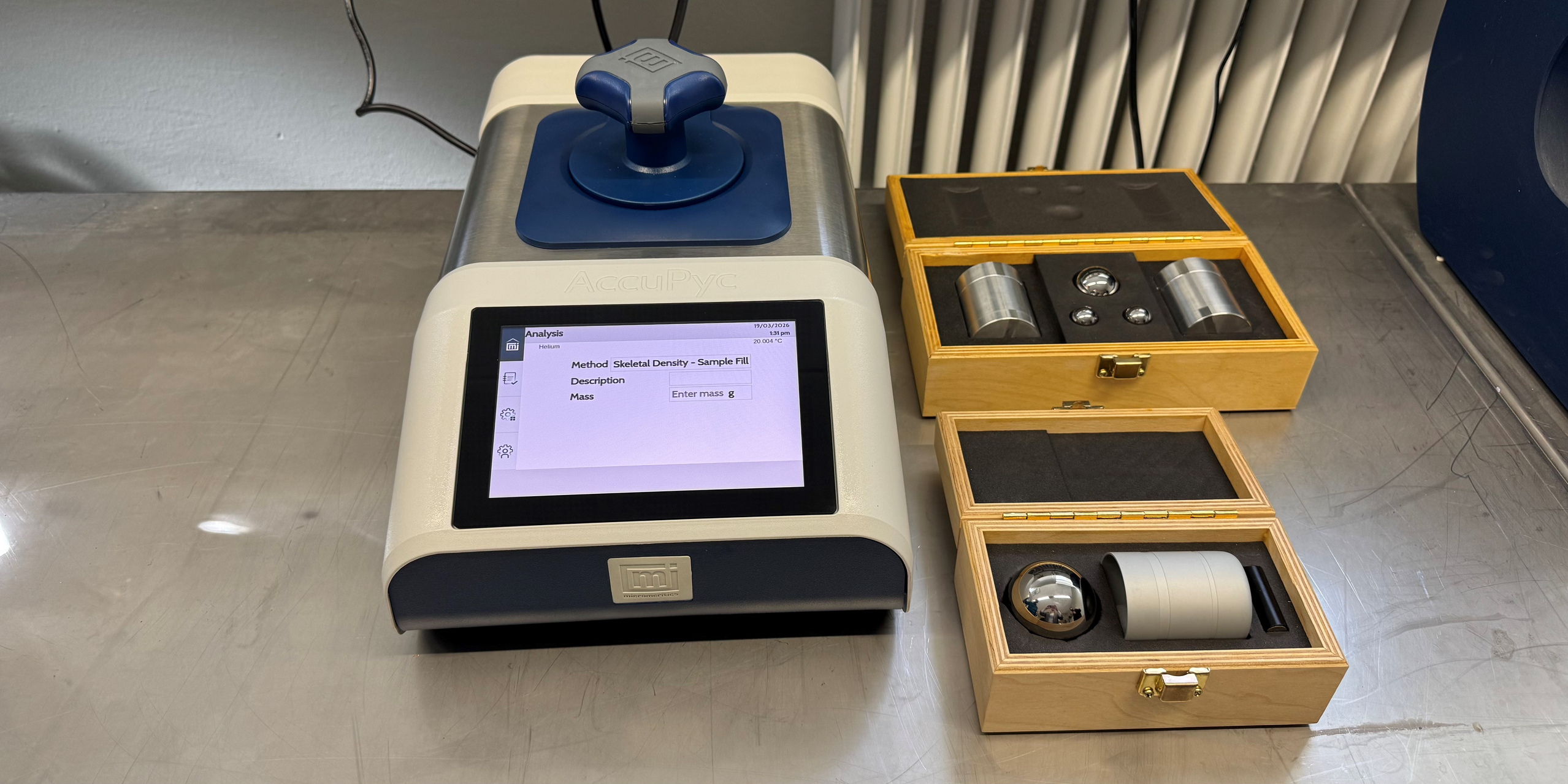
The gas pycnometer is used to precisely determine the true density (bulk density) and volume of solids, powders and porous materials. It employs a gas-volumetric displacement method using helium, which, due to its small atomic size, penetrates even the smallest pores. An integrated active temperature control system enables highly accurate measurements under stable conditions within a range of 4 °C to 60 °C.
Use in teaching and research
In teaching, students from various degree programmes can now independently determine the density of their materials in the laboratory. This eliminates the need to rely on values from the literature or wait several weeks for external analyses.
In research, the device is used to characterise a wide range of materials such as recycled granulates, porous polymers or battery materials. In building materials research, it supports in particular the development of low-carbon materials by precisely analysing the porosity that is crucial for moisture and salt transport. Thanks to interchangeable measuring cells, both very small sample quantities and larger pieces of material can be examined.
Thanks to our funders
This purchase was made possible through cross-departmental funding. We would like to thank the QSL committees of both departments for providing the funds to improve study conditions and teaching. Special thanks also go to the Research Centre for Materials and Process Engineering (fz mpt) for co-funding the project.